The Black Heron

yean rath
January 24, 2026 • 189 views
Advertisement

black-heron-umbrella-bird-canopy-feeding-facts
The Magician Bird That Turns Into an Umbrella
In the avian world, many birds are known for their vibrant colors, but few possess the sheer ingenuity and tactical brilliance of the Black Heron (Egretta ardesiaca). Often nicknamed the "Umbrella Bird," this fascinating creature is famous for its unique ability to transform its body into a perfect black parasol to trap its prey.
The Magic of "Canopy Feeding"
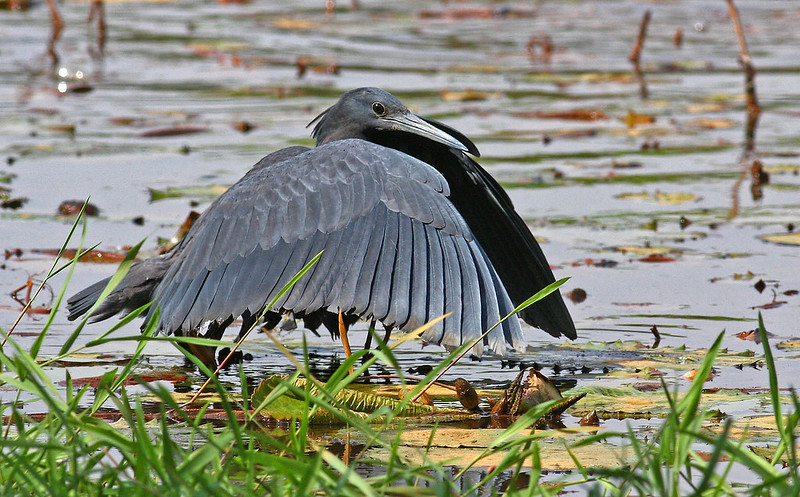
Have you ever seen a bird walking casually, only to suddenly morph into a black tent over the water? This behavior is scientifically known as Canopy Feeding.
How it works: The Black Heron wades into shallow water, then spreads its wings and wraps them forward around its head, creating a complete canopy that touches the water's surface.
Why do they do it? There are two genius reasons:
- Eliminating Glare: By blocking out the sun, the bird cuts the reflection on the water's surface, allowing it to see fish clearly without the glare.
- The Trap: Small fish naturally seek shade and shelter from predators. By creating a patch of artificial shadow, the heron lures unsuspecting fish right into striking range. They swim in for safety, only to meet their doom.
Appearance and Habitat
Despite its name, the Black Heron has some subtle details in its appearance.
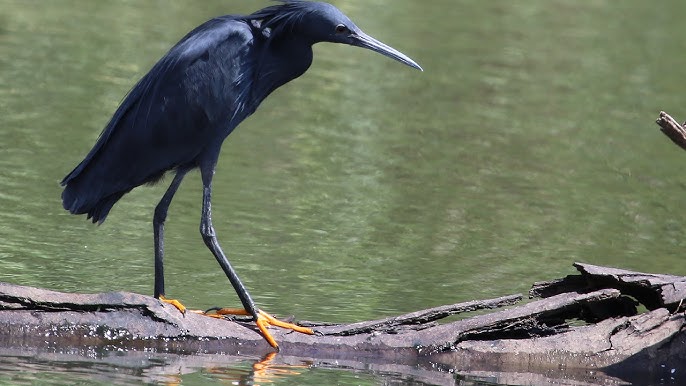
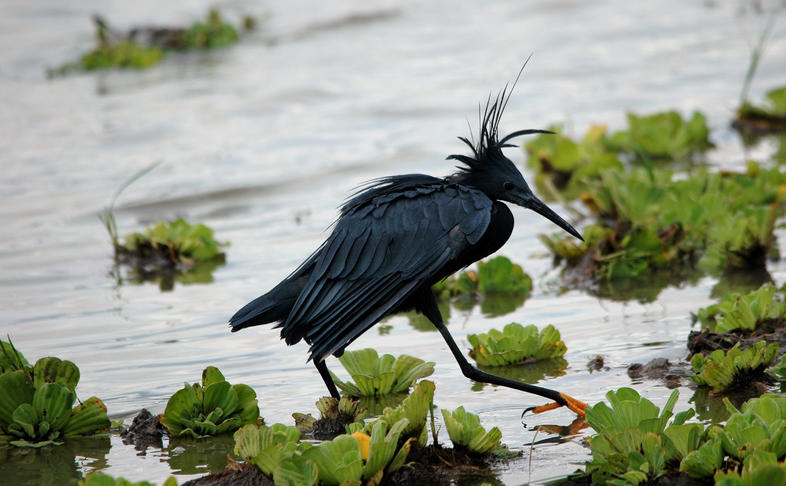
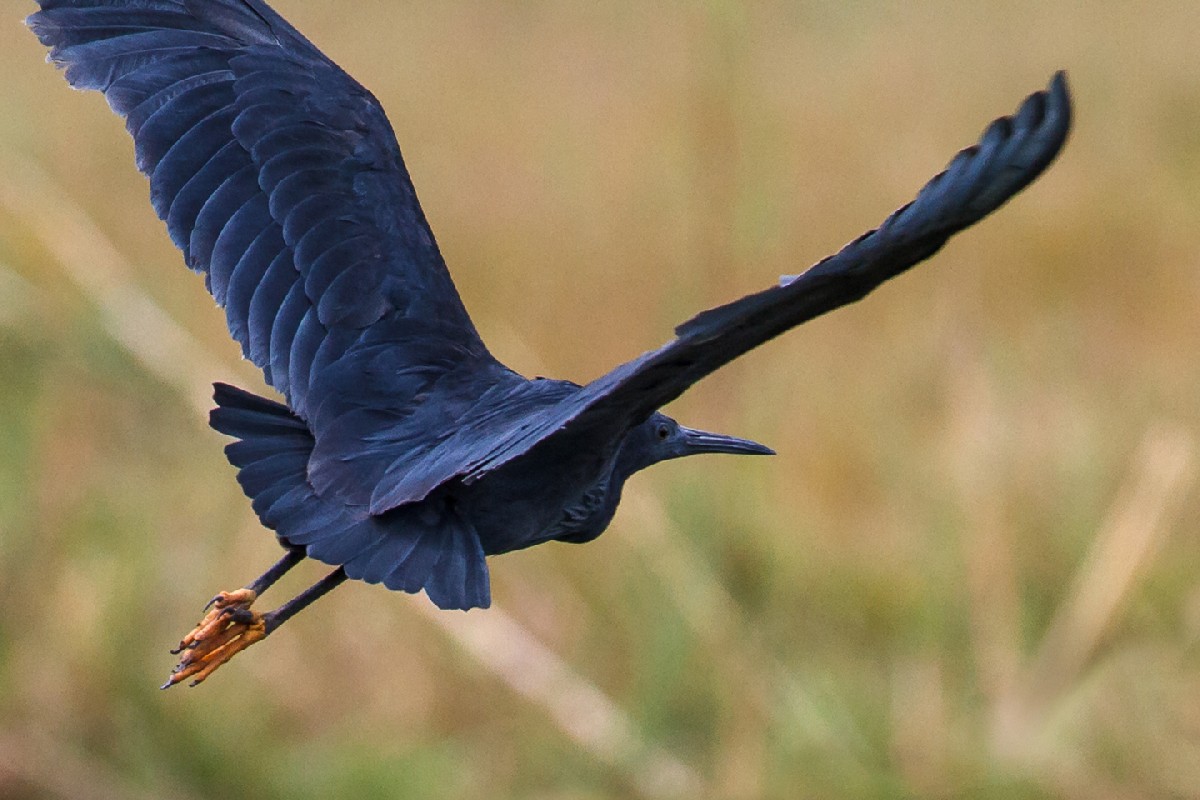
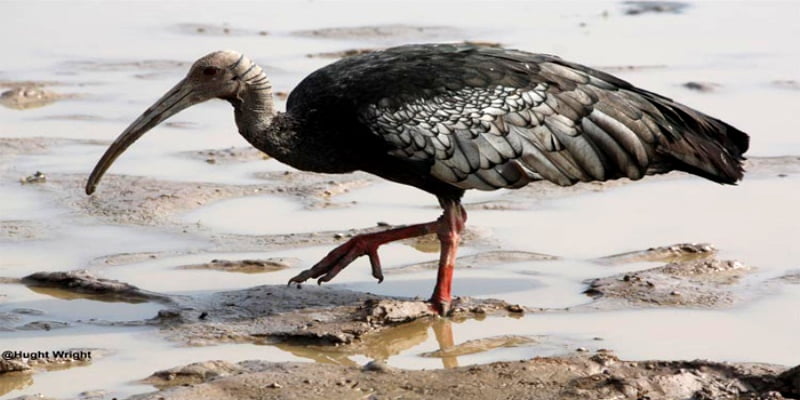
- Plumage: Its feathers are a rich slate-grey to deep black, giving it a sleek, stealthy look.
- Feet: While its legs are black, its feet are often bright yellow. Some scientists believe the bright feet might act as a lure or help disturb prey in muddy waters.
- Habitat: It is important to note that the Black Heron is native to Sub-Saharan Africa and Madagascar, not Southeast Asia. They thrive in shallow lakes, rivers, and freshwater marshes.
Social Behavior
Interestingly, while their hunting technique looks like a solitary magic trick, Black Herons are quite social. They often roost in large colonies at night. However, during the day, if one heron finds a good fishing spot, others might rush over to join the feast, leading to a crowded "umbrella party."
The Black Heron is a masterclass in evolutionary adaptation. It doesn't rely on brute strength or speed; instead, it uses physics and psychology (light, shadow, and fish behavior) to survive. It is truly the engineer of the bird world.
References
- BirdLife International. (2024). Species factsheet: Egretta ardesiaca.
- Hancock, J., & Kushlan, J. (1984). The Herons Handbook. Croom Helm.
- Del Hoyo, J., et al. (1992). Handbook of the Birds of the World, Vol. 1. Lynx Edicions.
- African Bird Club. "Behavioral Observations of the Black Heron."
Advertisement
Photo Gallery