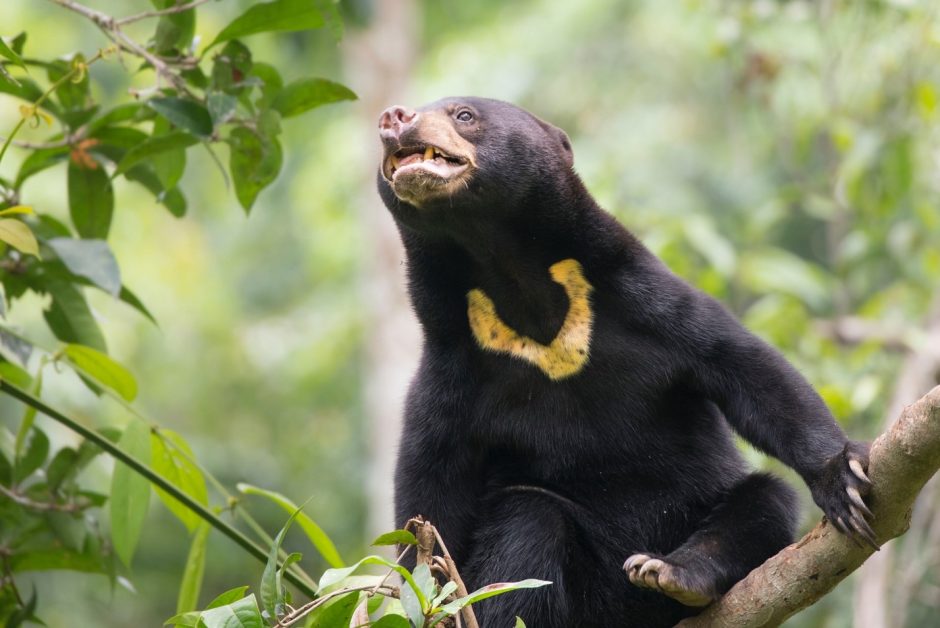
Clouded leopard

yean rath
January 09, 2026 • 321 views
Advertisement

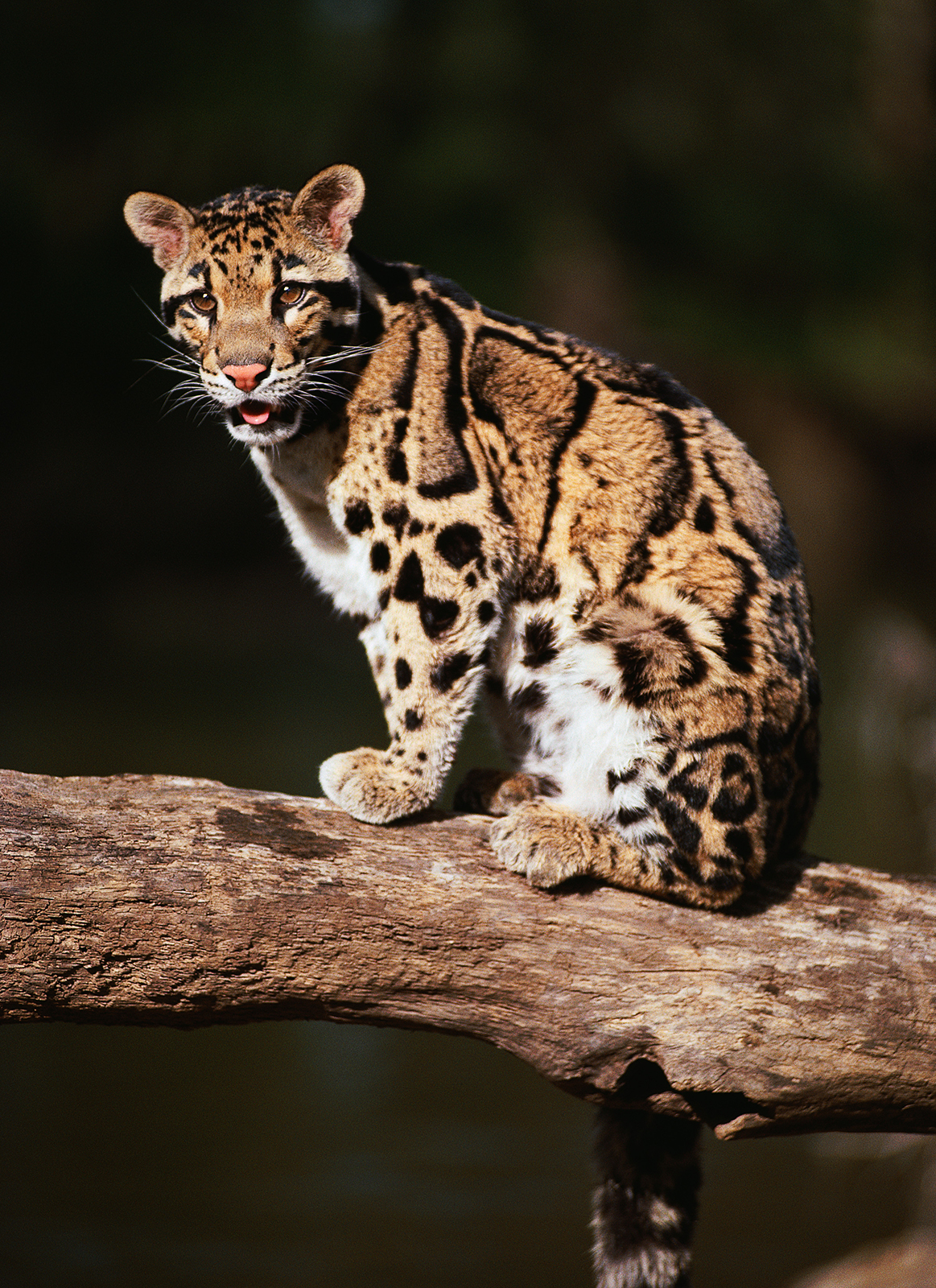
A Clouded Leopard resting on a tree branch in a dense rainforest, showing its cloud-like spots.
Spirit of the Forest and the Modern-Day "Saber-Tooth"
Deep within the dense canopies and tangled vines of Southeast Asia, including the sacred Cardamom Mountains of Cambodia, moves a silent, beautiful predator. Its coat bears patterns reminiscent of clouds floating across the sky, and it navigates the trees with the agility of a monkey. It is not a leopard, nor is it a tiger. This is the Clouded Leopard (Neofelis nebulosa).
Despite being one of the most stunning creatures on Earth, the Clouded Leopard remains one of the least understood. It is so elusive and rarely seen by human eyes that scientists have aptly nicknamed it "The Ghost of the Forest."
An Evolutionary Bridge
Many people mistakenly believe the Clouded Leopard is a type of leopard. In reality, it is a distinct genus (Neofelis). Genetically, it acts as an "evolutionary bridge" between the small cats (like wildcats) and the big cats (like tigers and lions).
It is an ancient lineage. Studies suggest that the Clouded Leopard diverged from the pantherine family (big cats) over six million years ago, making it a living fossil of sorts.
The Modern-Day Sabre-Tooth
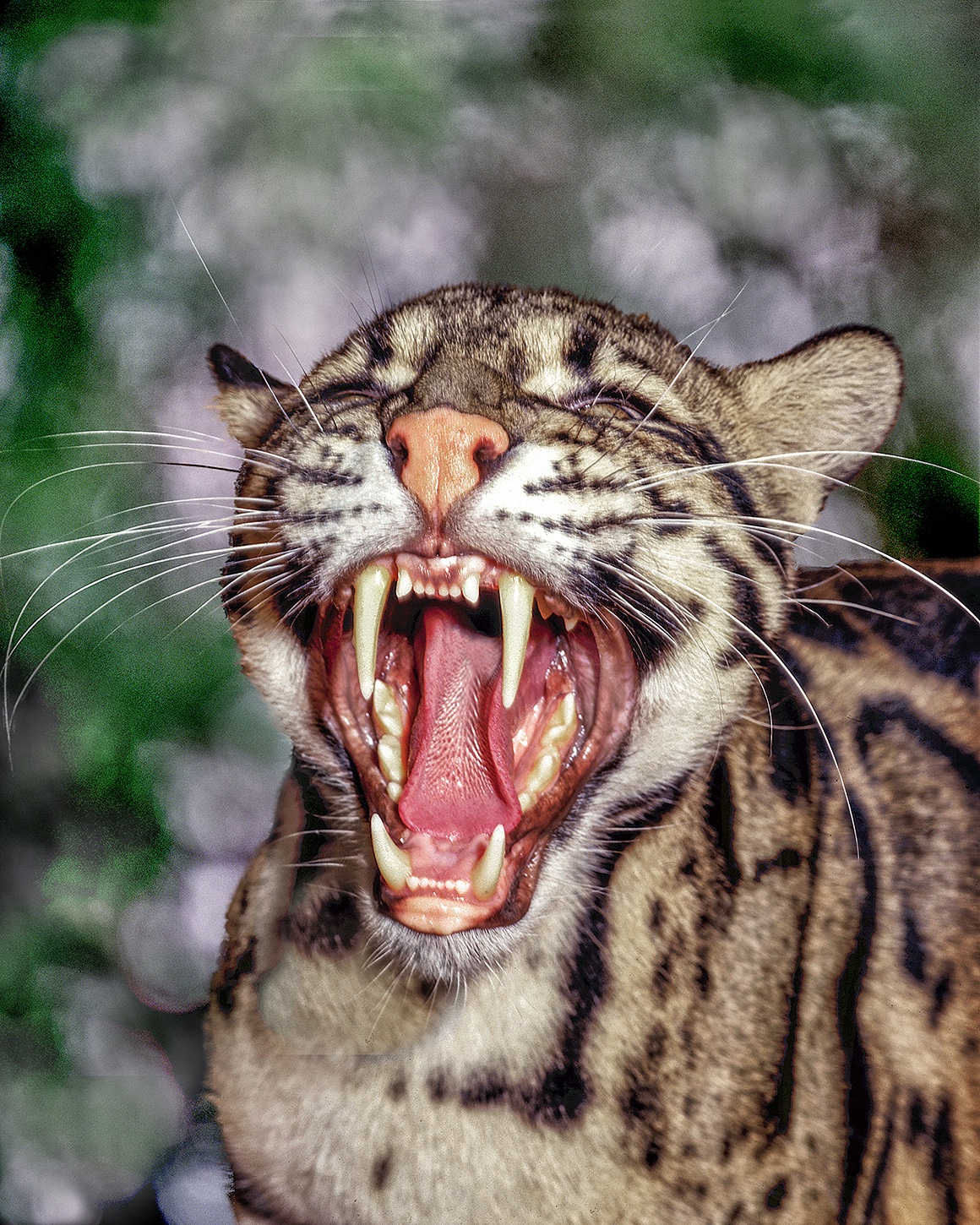
The most shocking feature of this cat is its teeth. Proportionally to its skull size, the Clouded Leopard possesses the longest canine teeth of any living cat species. With fangs measuring up to 4 centimeters (1.5 inches) or more, it is essentially a modern-day Sabre-toothed Cat.
These dagger-like teeth allow it to take down prey significantly larger than itself by delivering a precise, severing bite to the back of the neck, crushing the spine.
The Arboreal Acrobat
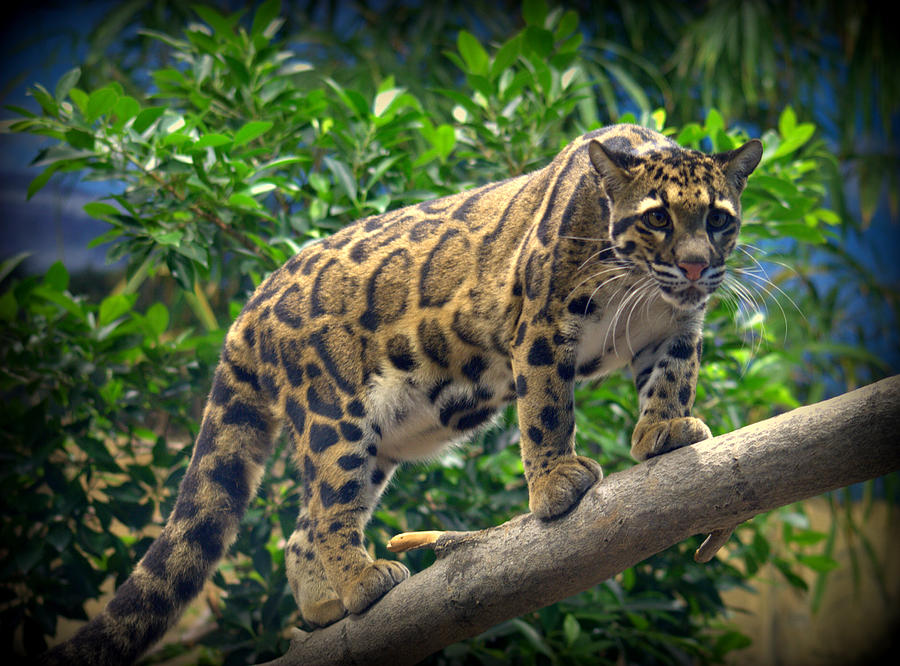
If there were a gymnastics competition in the jungle, the Clouded Leopard would take the gold medal. It is one of the few cat species (along with the Margay of South America) that possesses rotating ankles capable of turning 180 degrees.
This unique adaptation allows them to:
- Climb down trees headfirst like a squirrel.
- Hang from branches using only their hind legs.
- Run upside down along horizontal branches and leap between trees with effortless grace.
Habitat and Status in Cambodia
Clouded Leopards are found across Southeast Asia, from the Himalayan foothills to China and Malaysia. Cambodia is incredibly fortunate to still count itself as home to these rare creatures.
In Cambodia: They have been recorded (mostly via camera traps) in key protected areas such as:
- The Cardamom Mountains
- The Eastern Plains Landscape (Mondulkiri)
- Virachey National Park
However, the IUCN classifies the Clouded Leopard as Vulnerable. Their population is fragmented and declining rapidly.
Threats: Why We Might Lose Them
The Clouded Leopard’s biggest enemy is not the tiger or the elephant, but humans.
- Deforestation: The conversion of forests into agricultural land and palm oil plantations strips them of their arboreal homes. Clouded Leopards are strictly forest-dependent; they cannot survive in open areas.
- Poaching: Because of their uniquely beautiful coats, they are heavily hunted for the illegal wildlife trade. Their skins are sold as luxury rugs, while their bones and teeth are trafficked for traditional medicine.
The Clouded Leopard is a priceless natural treasure. It represents not only the wild beauty of Cambodia’s forests but also millions of years of evolutionary history. Protecting the forests of the Cardamoms and beyond is synonymous with protecting the last breaths of this modern-day sabre-tooth. Let us ensure that their cloud-like patterns remain a living wonder, not just a picture in a history book.
References
- IUCN Red List of Threatened Species: Neofelis nebulosa.
- WWF (World Wildlife Fund): Clouded Leopard Species Profile.
- National Geographic: "Clouded Leopard: The Climber of the Cats."
- Smithsonian's National Zoo & Conservation Biology Institute: Clouded Leopard Facts.
- Wildlife Alliance Cambodia: Camera trap records in the Cardamom Rainforest Landscape.
Advertisement
Photo Gallery