The Great Hornbill

yean rath
January 26, 2026 • 346 views
Advertisement

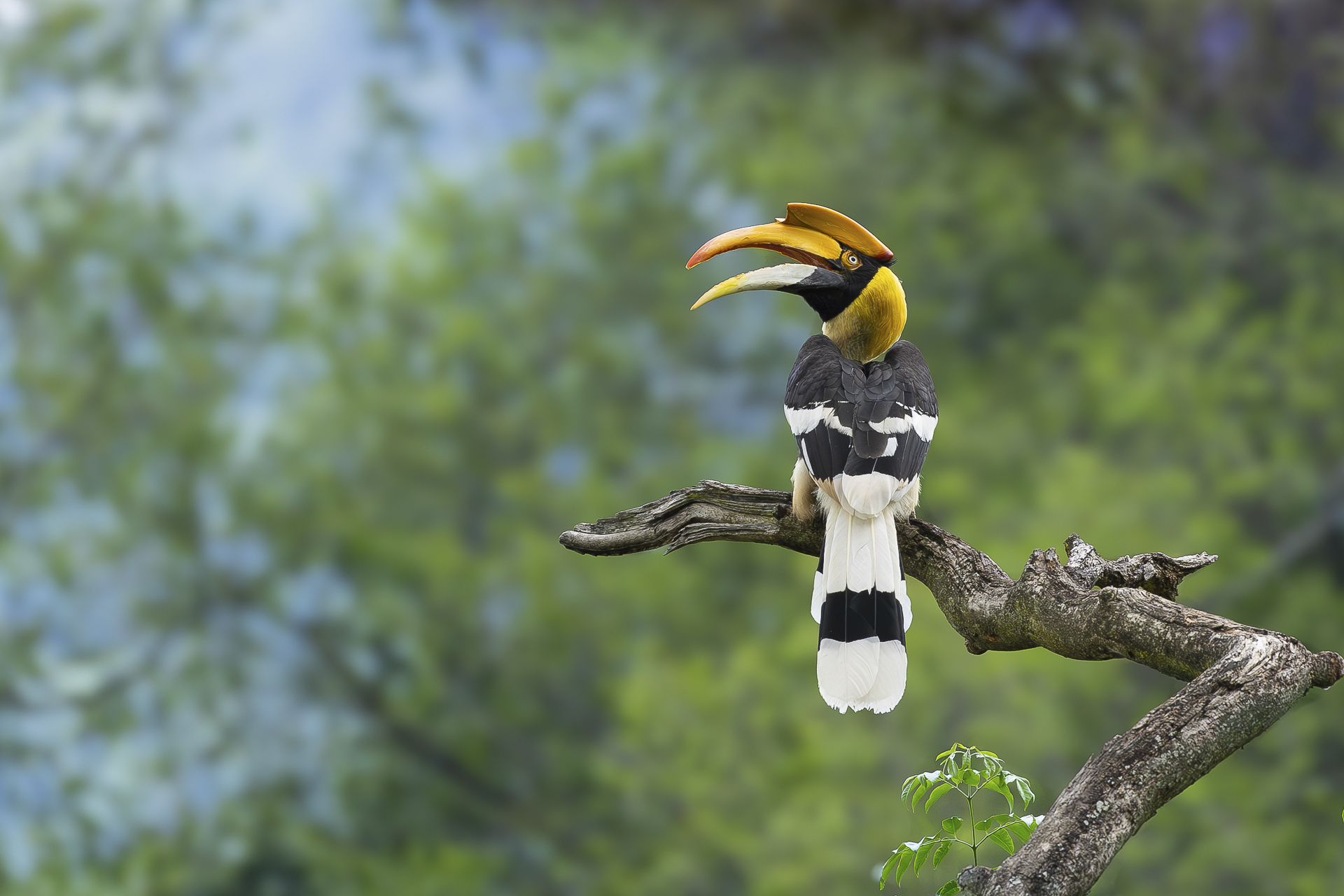
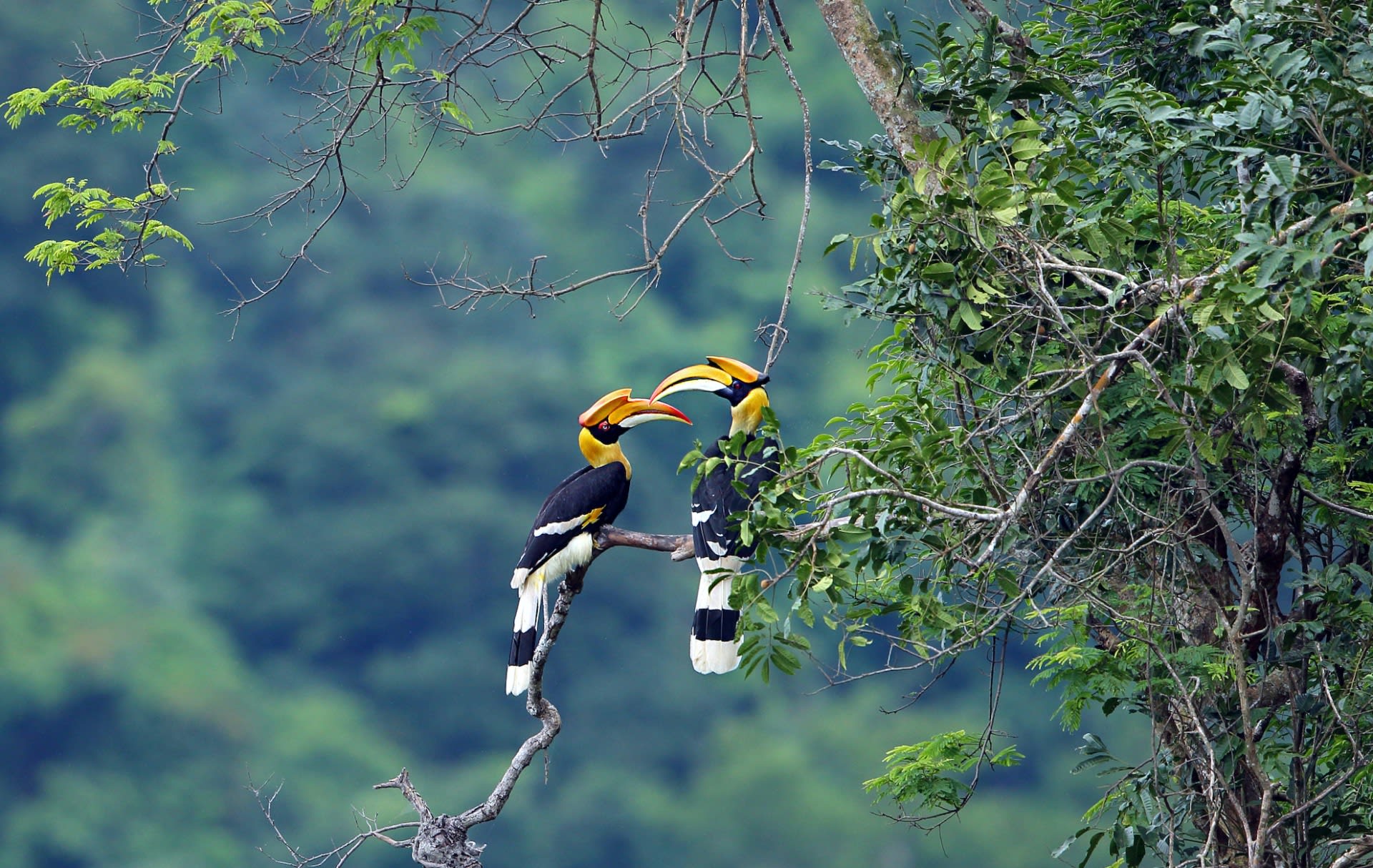
A close-up of a Great Hornbill perched on a tropical tree branch, showcasing its massive yellow and black beak and red eyes.
A Symbol of Eternal Love and the "Farmer" of Cambodia's Forests
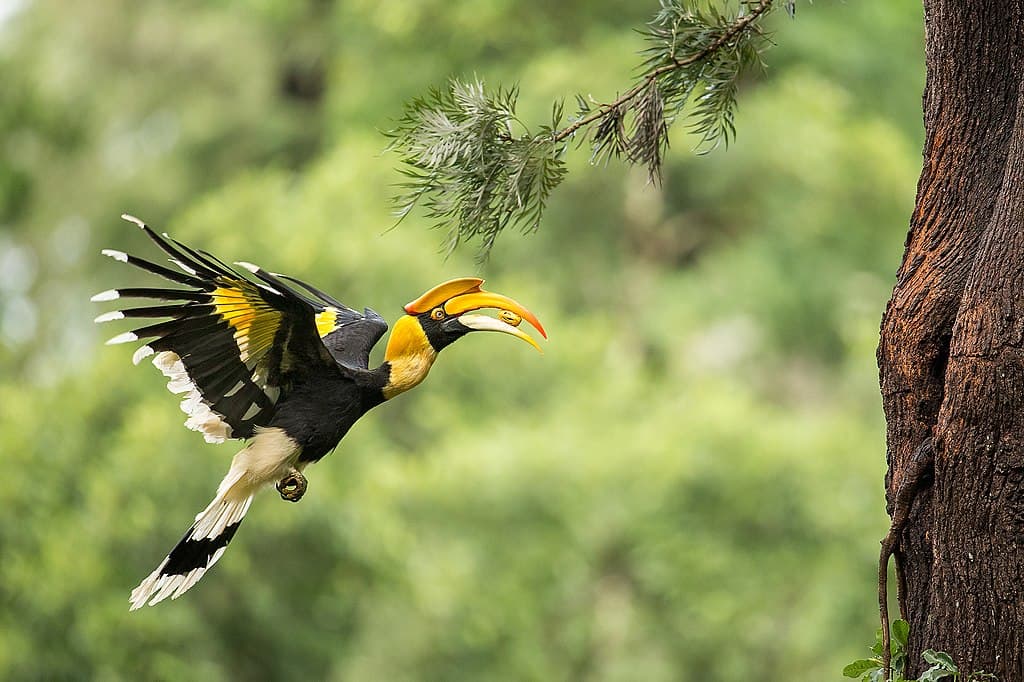
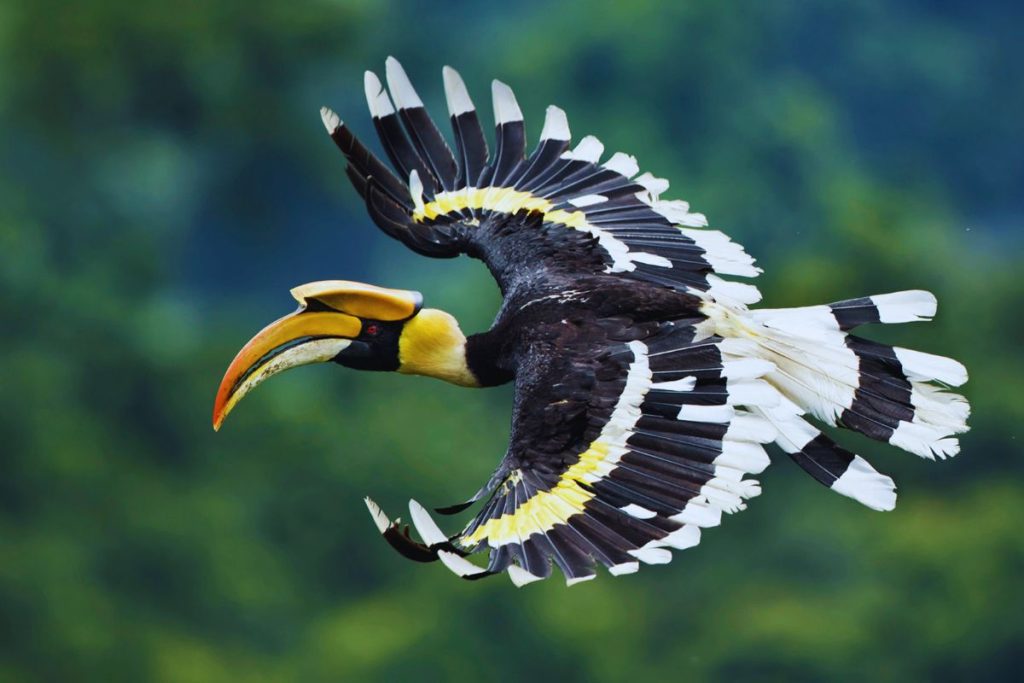
If you trek deep into the dense canopies of the Cardamom Mountains or the Eastern Plains of Cambodia and hear a loud, rhythmic "whoosh... whoosh..." sound like a helicopter flying overhead, look up. You might be lucky enough to spot one of nature's most magnificent birds, sporting a massive beak and wide-spanning wings. This is the Great Hornbill (Buceros bicornis), known locally in Cambodia as Kor Kat or Tontriet Thom.
Revered as the "King of Forest Birds" due to its immense size and commanding presence, the Great Hornbill holds a secret. Behind its prehistoric appearance lies a creature of deep romance, loyalty, and a crucial role as the guardian of the forest ecosystem.
A Prehistoric Appearance
The Great Hornbill is one of the largest members of the hornbill family in Asia.
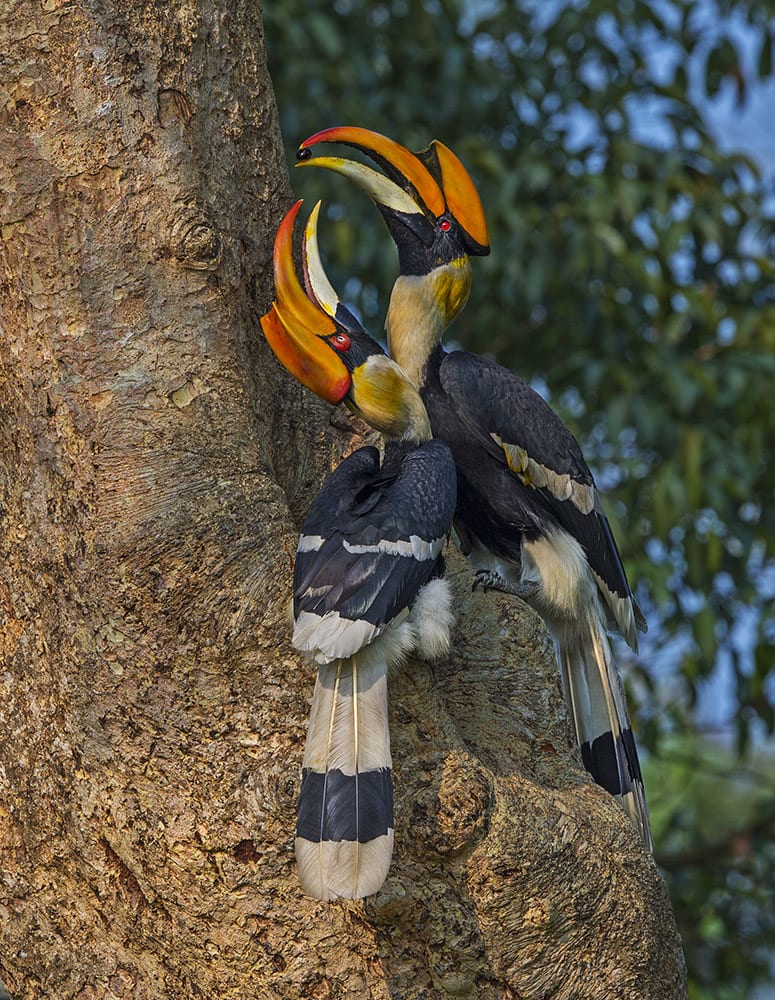
- The Casque: Its most striking feature is the bright yellow "casque" (helmet) sitting atop its beak. While it looks heavy and solid like bone, it is actually hollow inside. This structure acts as a resonance chamber, amplifying the bird's calls across the forest.
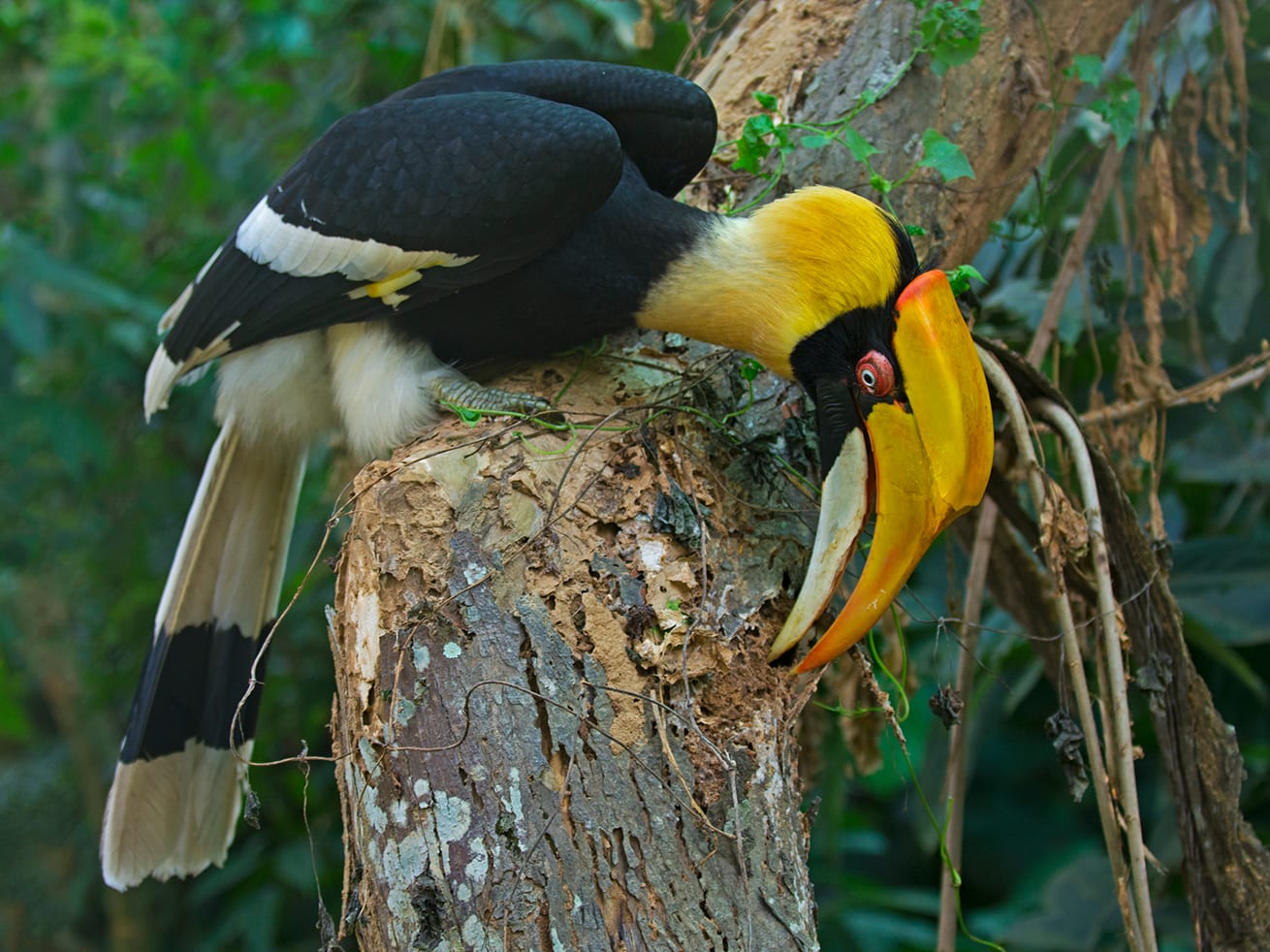
- The Color Secret: Here is a fascinating fact: The vibrant yellow color on its beak and white feathers isn't natural pigment. It comes from a preen gland near the tail. The bird rubs its beak on this gland and applies the oily substance to its feathers and casque, essentially applying its own "makeup."
A Love Story: Trust Unto Death
What makes the Great Hornbill truly legendary is its love life. They are strictly monogamous, mating for life and displaying a level of loyalty rare in the animal kingdom.
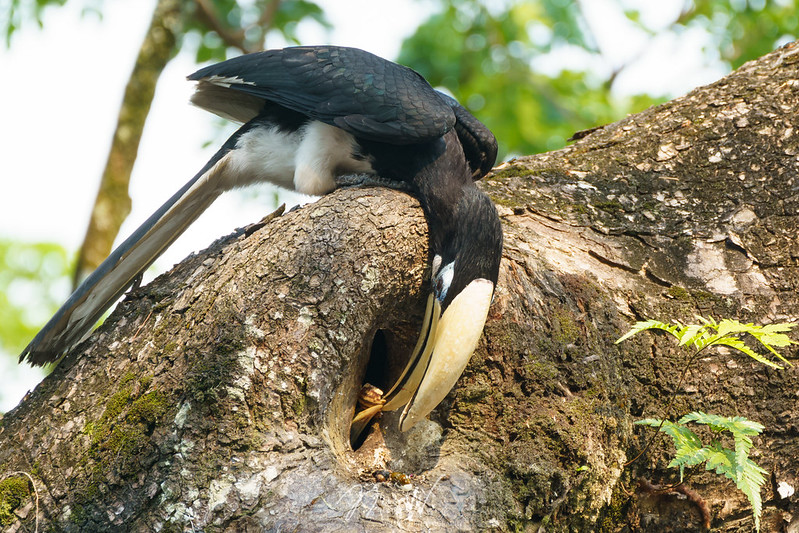
The Nesting Ritual: When breeding season arrives, the couple finds a large natural hollow in an old tree. The female enters the hollow, and together, they proceed to seal the entrance using mud, droppings, and fruit pulp. They leave only a tiny slit open—just wide enough for the male to pass food through.
The Sacrifice: The female remains imprisoned in this dark nest for months to lay eggs and incubate them. During this time, she undergoes a full molt, shedding her flight feathers, making her completely flightless and vulnerable. Her life, and the lives of her chicks, depend entirely on the male. He must work tirelessly every day to bring food to the nest. This is why hunting a male hornbill is a tragedy—it wipes out the entire family. If the male is killed, the female and chicks trapped inside will starve to death.
Farmers of the Forest
The Great Hornbill plays an irreplaceable role in the ecosystem, earning the title "Farmer of the Forest." Their diet consists mainly of fruit, especially nutrient-rich figs. Because of their large size and wide flight range, they consume vast amounts of fruit and disperse seeds across great distances through their droppings. Many of the giant trees in Cambodia’s rainforests were likely "planted" by a passing hornbill.
Status in Cambodia and Threats
In Cambodia, Great Hornbills can still be found in dense evergreen forests and protected areas such as:
- The Cardamom National Park
- Keo Seima Wildlife Sanctuary
- Virachey National Park
However, the IUCN lists them as Vulnerable. Their populations are declining due to:
- Logging of Old-Growth Trees: They require massive, ancient trees with natural hollows for nesting. Deforestation and illegal logging destroy their only means of reproduction.
- Poaching: They are hunted for their casques (carved as "red ivory"), their meat, or for the illegal pet trade.
The Great Hornbill is not just a bird; it is a symbol of love, sacrifice, and life. Their presence is a key indicator of a healthy forest ecosystem. Protecting the Great Hornbill means protecting Cambodia’s greatest forest planter. Let us work together to ensure that the "helicopter sound of the jungle" continues to echo for generations to come.
References
- IUCN Red List of Threatened Species: Buceros bicornis.
- BirdLife International: Great Hornbill Species Factsheet.
- WCS Cambodia (Wildlife Conservation Society): Birds of the Northern Plains and Keo Seima.
- Poonswad, P. (1995). The Hornbills. Thai National Park, Wildlife and Plant Conservation Department.
- Ministry of Environment, Cambodia: Reports on Biodiversity in Cardamom Mountains.
Advertisement
Photo Gallery