The Royal Sword

yean rath
January 16, 2026 • 205 views
Advertisement

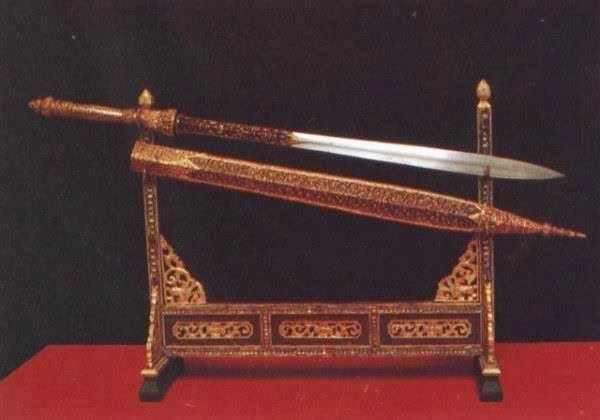
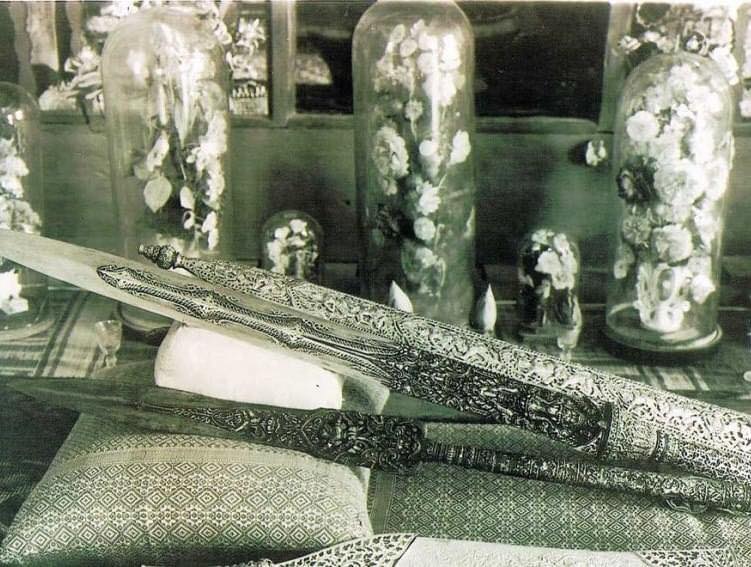
The Preah Khan Reach (Royal Sword) resting on a golden pedestal inside the Throne Hall during a Royal Coronation ceremony.
The Weapon of Gods and the Breath of the Khmer Throne
Preah Khan Reach: The Weapon of Gods and the Breath of the Khmer Throne
In the pages of history and the beliefs of the Khmer nation, no weapon holds as much power and mystery as the "Preah Khan Reach" (The Royal Sacred Sword). It is not merely an instrument of war; it is the embodiment of "Devaraja" (God-King) power, a shield for the Monarch, and a spiritual "thermometer" believed to measure the fate of the entire nation.
Ranking highest among the Royal Regalia (Benja Kshetra) indispensable for the Coronation Ceremony, Preah Khan Reach is believed by Cambodians to possess a "soul." It is guarded with the utmost strictness within the Royal Palace, hidden from the eyes of commoners and untouched by anyone except the King and the high-ranking Bakou Brahmins.
The Legend and Divine Origin
Where did Preah Khan Reach come from? According to ancient legends inscribed in historical texts, this sword was not forged by mortal hands. The legend tells that Indra, the King of Gods, descended to bestow this sword upon the first Khmer King as a symbol of divine right to rule the earth and protect the people.
Inscriptions and chronicles suggest that Preah Khan Reach has been a royal heritage since the Angkorian era. It is deeply intertwined with the legend of "Ta Trasak Paem" (The Sweet Cucumber King), safeguarded by the Royal Brahmins from the moment he ascended the throne.
Physical Characteristics and Craftsmanship
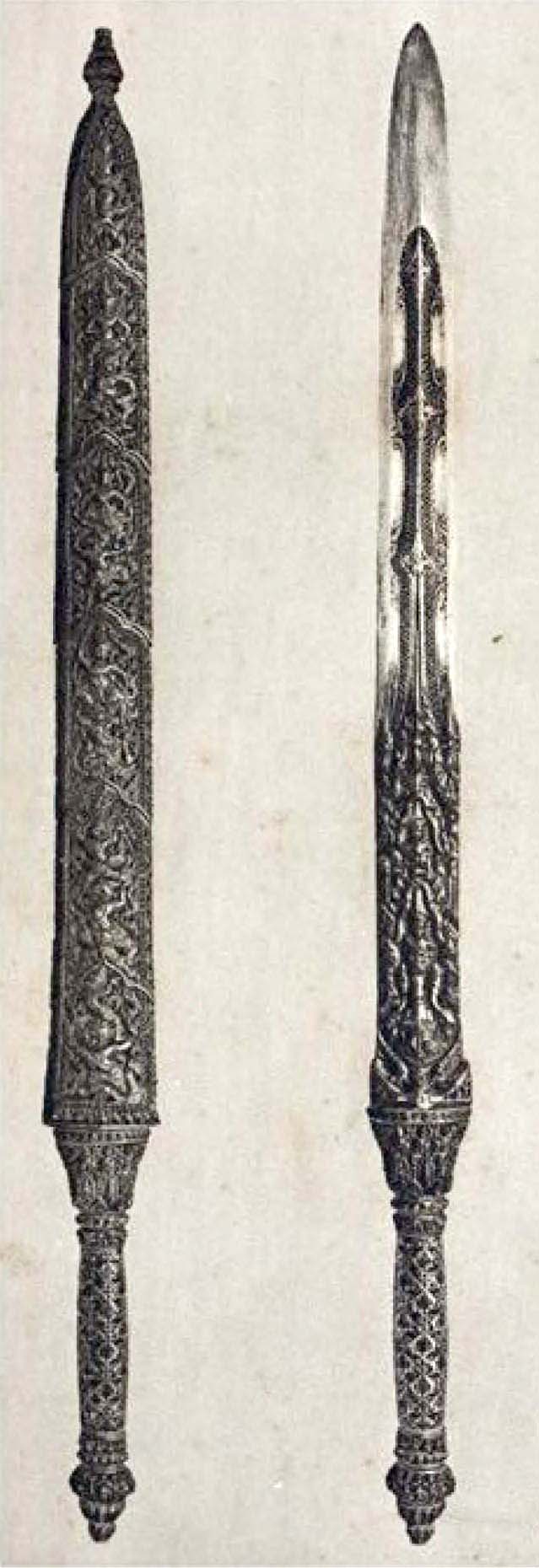
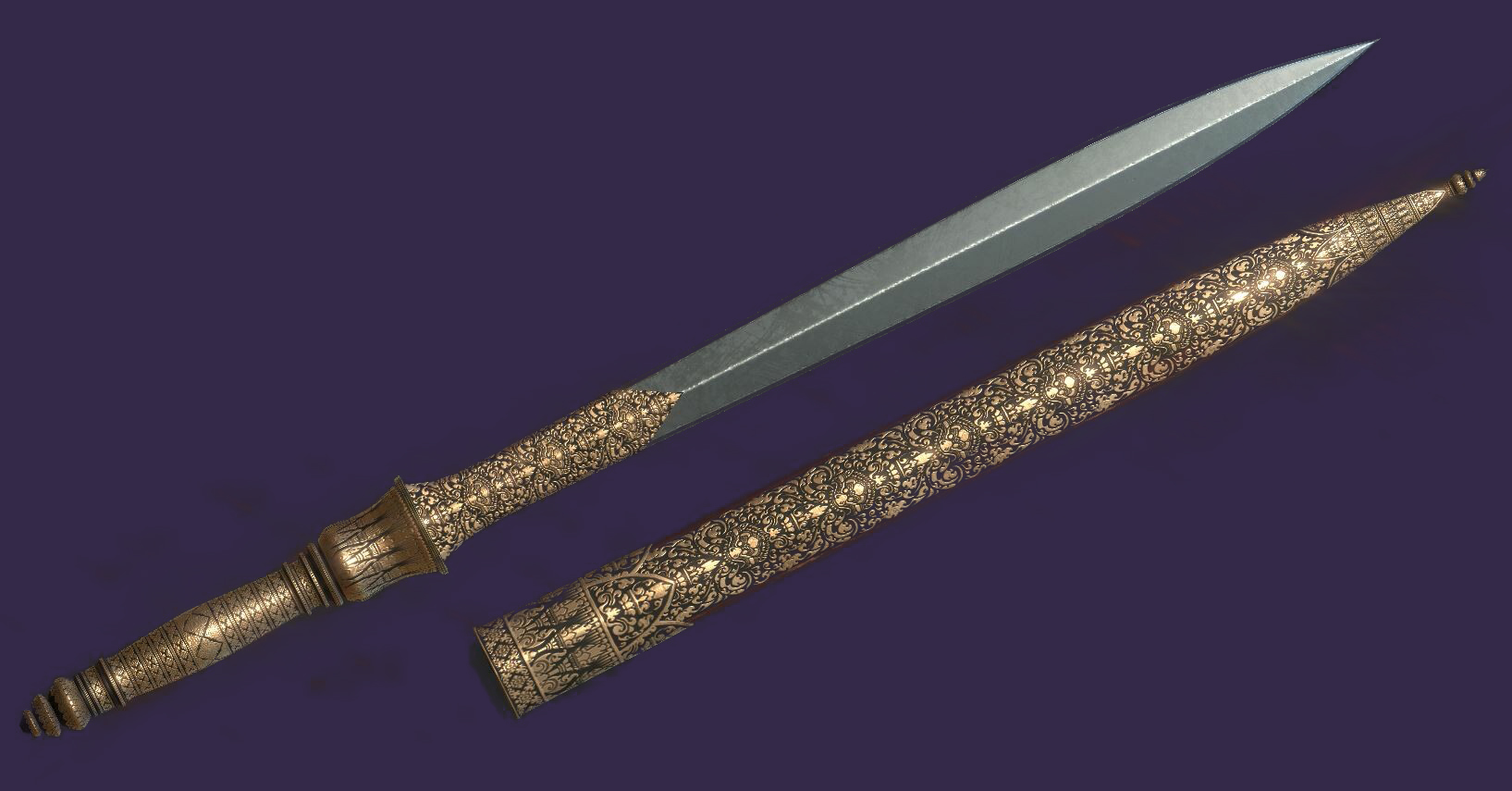
Preah Khan Reach is a heavy, double-edged sword, significantly distinct from ordinary weaponry.
- The Blade: Forged from steel mixed with various sacred metals. The blade features intricate engravings that showcase the zenith of ancient Khmer metallurgy.
- The Hilt: Crafted from pure gold and encrusted with precious gemstones, representing the wealth and glory of the kingdom.
- The Scabbard: Encased in gold and adorned with motifs of mythical creatures and traditional "Kbach Phni" (floral scrollwork).
The Bakou: Keepers of the Secret
The sanctity of Preah Khan Reach lies in its seclusion. It is never displayed publicly as a museum artifact. It resides within the "Hor Preah Khan" or "Hor Samran" inside the Royal Palace complex.
The only individuals authorized to guard, polish, and touch the sword are the Bakou (Royal Brahmins). These are the direct descendants of the ancient court priests who have served the Khmer monarchy since the Angkorian era. They are responsible for performing rituals and cleansing the blade at specific astrological times to maintain its spiritual power.
The Omen of Rust and National Fate
A profound belief held by the Bakou and the Royal Family concerns the "color of the blade." It is believed that if Preah Khan Reach suddenly develops rust or becomes dull without cause, it is a dire omen indicating that the nation faces famine, war, or chaos. Conversely, if the blade shines brightly, it foretells an era of peace, prosperity, and stability for the Kingdom.
Role in the Coronation
Preah Khan Reach is the centerpiece of the Coronation Ceremony. A new King is not considered fully invested with sovereign power until he receives the Royal Sword from the Chief of the Bakou. The moment the King accepts the sword and slightly unsheathes it to reveal its brilliance, he is spiritually and legally transformed into the full "Lord of the Earth."
Preah Khan Reach is not merely an antique artifact made of gold and steel. It is the "Soul" that connects the glorious past of the Khmer Empire to the present day. The fact that it is still strictly guarded and revered within the Royal Palace today is a testament that Khmer civilization, tradition, and identity remain alive, resilient, and unbroken.
References
- Thierry, S. (1959). Les insignes royaux au Cambodge (The Royal Insignia of Cambodia).
- Aymonier, E. (1900). Le Cambodge. E. Leroux.
- Royal Palace of Cambodia. Documents on the Royal Coronation of His Majesty King Norodom Sihamoni (2004).
- Pou, S. (2000). Dictionary of Old Khmer.
Advertisement
Photo Gallery