The Sarus Crane

YEAN RATH
January 09, 2026 • 172 views
Advertisement

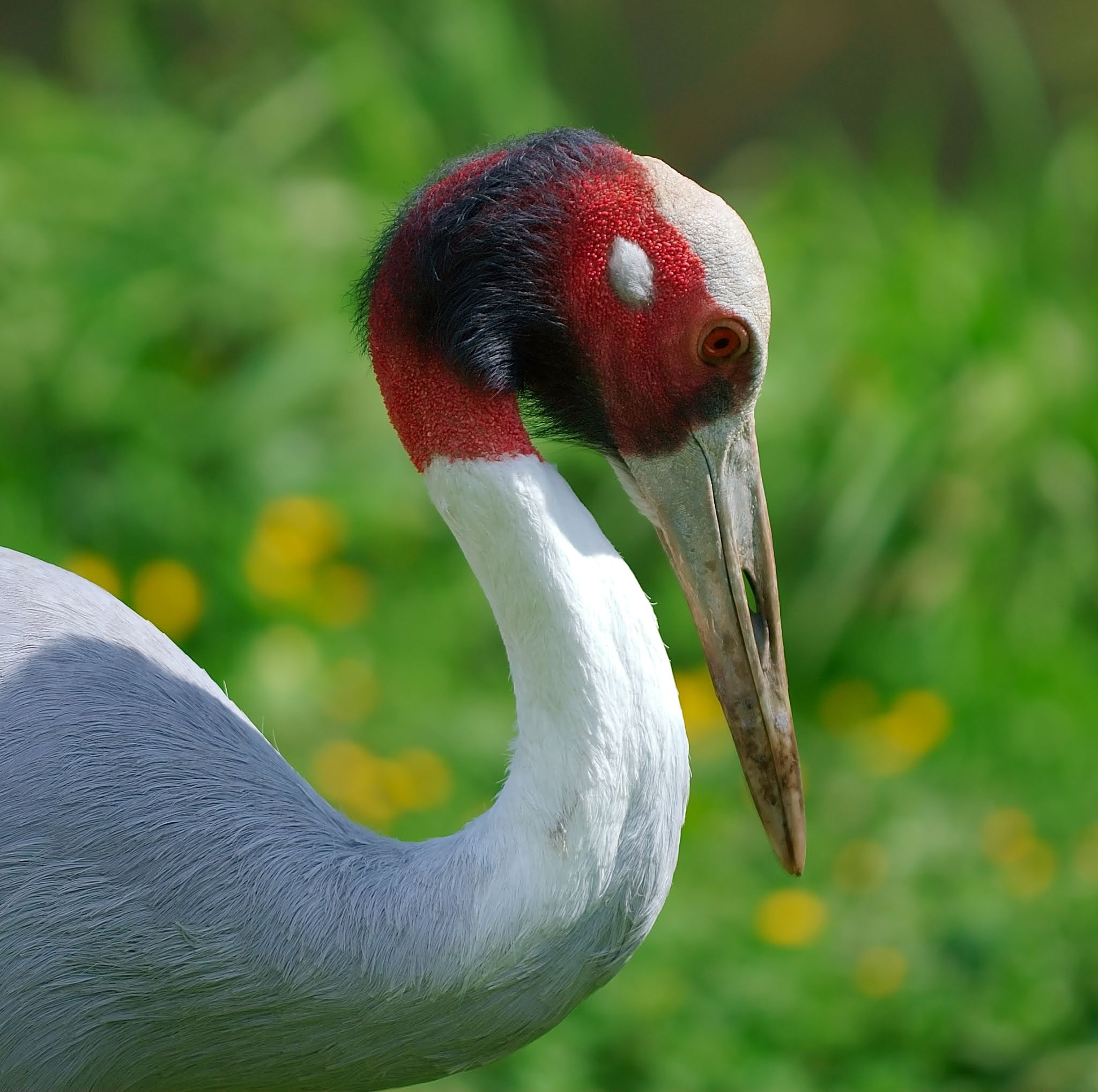
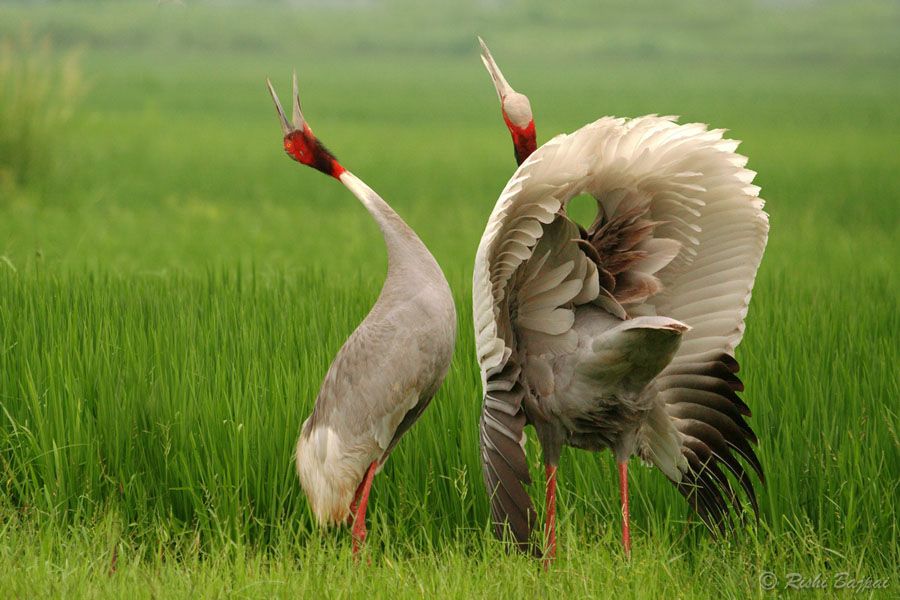
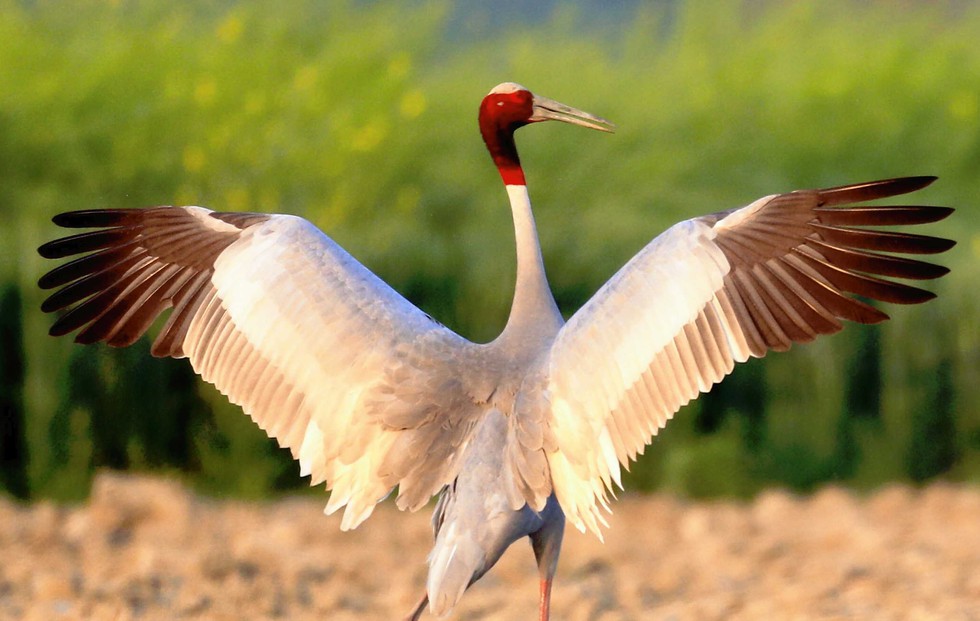
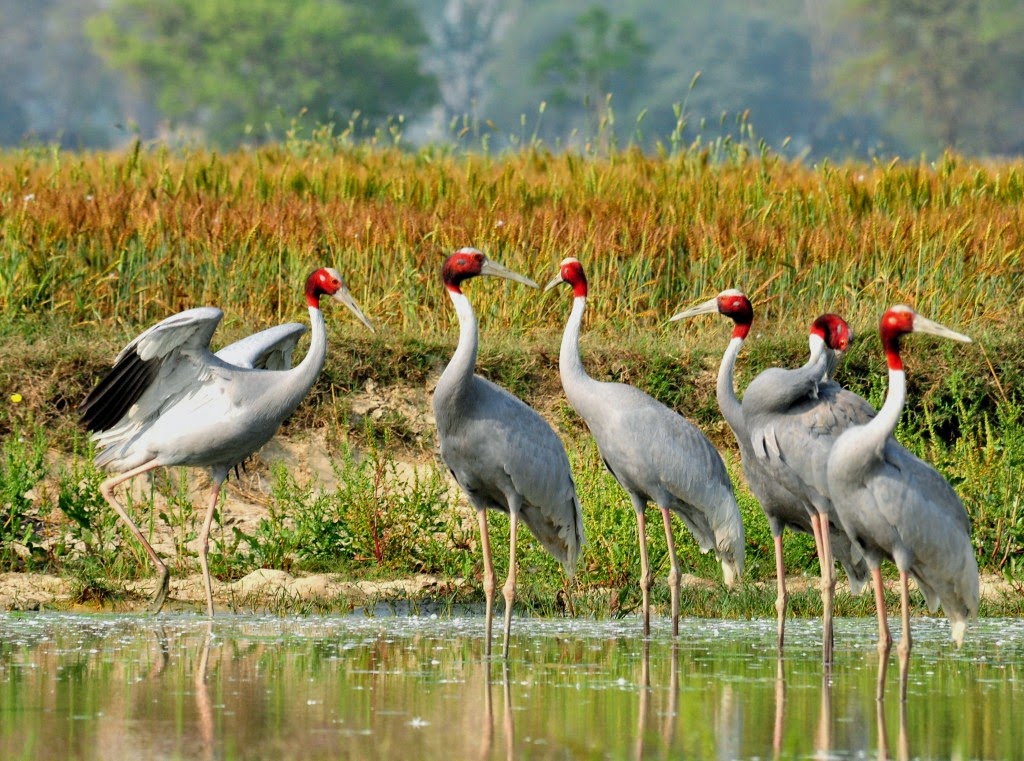
A pair of Sarus Cranes standing in a wetland in Cambodia, showing their long red necks and grey plumage.
Queen of the Wetlands and the Endangered Symbol of Loyalty
In the serene beauty of the wetlands at dawn, one can often spot a majestic, tall bird standing proudly amidst the flooded grasslands. With its soaring height, graceful stride, and resonant calls that echo across the plains, it is no ordinary bird. This is the Sarus Crane (Antigone antigone), the tallest flying bird in the world and the rightful sovereign of Asia’s freshwater wetlands.
Biology and Magnificent Appearance
The Sarus Crane is a marvel of nature. The defining characteristic that sets it apart is its sheer stature; when standing upright, it can reach a height of nearly 1.8 meters (about 5 feet 11 inches), making it taller than many average humans.
Key Features:
- Plumage: Its entire body is draped in elegant, smooth grey feathers.
- Head and Neck: The most striking feature is its vibrant, naked red skin on the head and upper neck, which contrasts beautifully with its plumage.
- Legs: Long, pale pinkish legs allow it to navigate through deep swamp waters with ease.
A Symbol of Loyalty and Eternal Love
In Khmer culture and several Asian traditions, the Sarus Crane is revered as a symbol of "loyalty" and "eternal love." These birds are strictly monogamous, pairing for life.
Legend has it that if one partner dies, the remaining crane will grieve inconsolably, sometimes wasting away or starving to death. While this borders on folklore, scientific observation confirms their profound bond, expressed through intricate "dances" and complex "duet calls" used to reinforce their lifelong commitment to one another.
The Sarus Crane in Cambodia
Cambodia is a vital sanctuary for the Eastern Sarus Crane subspecies. These birds follow a seasonal migratory pattern within the Mekong basin:
- Breeding Season: They move to the deciduous forests of Preah Vihear and the Northern Plains.
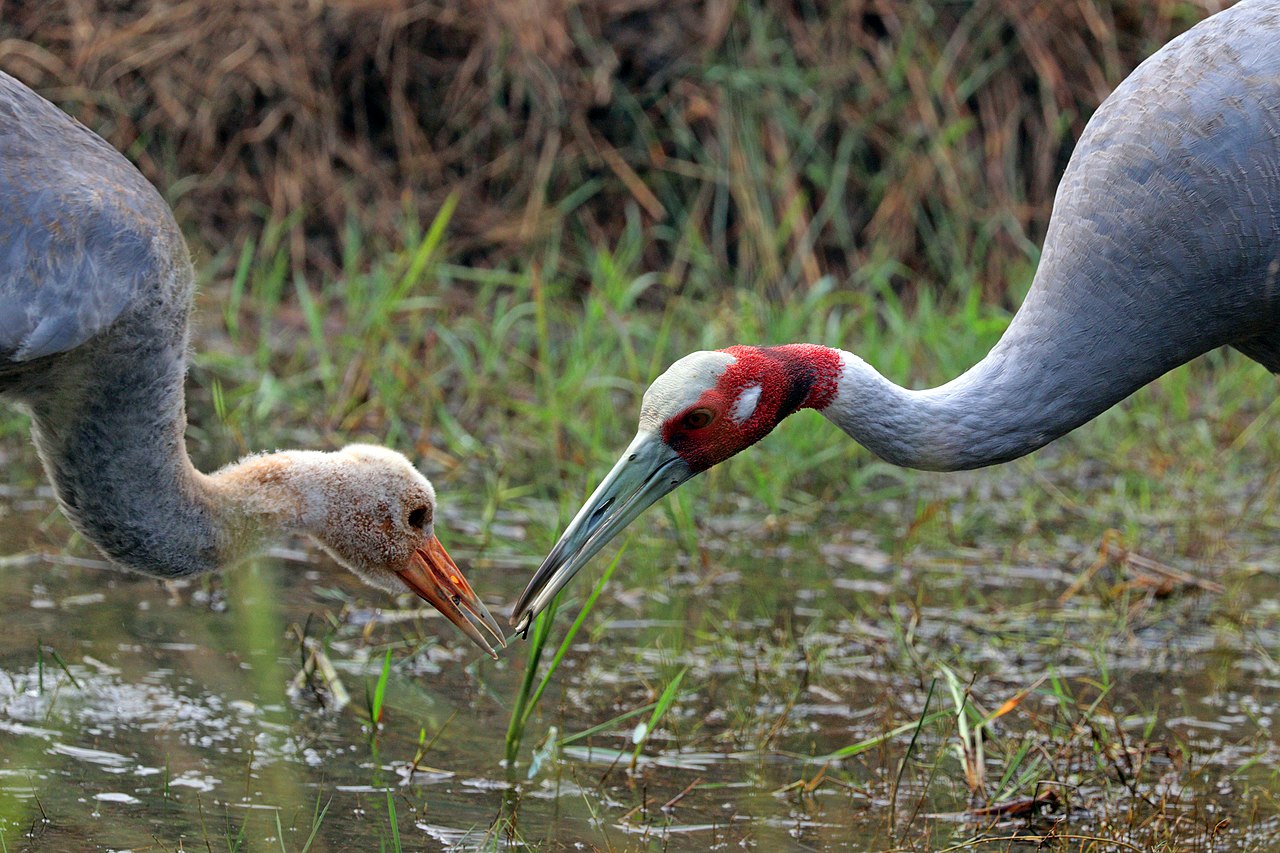
- Non-breeding Season (Feeding): They migrate to the coastal and southern wetlands, specifically the Anlung Pring Protected Landscape (Kampot) and the Boeung Prek Lapouv (Takeo) to feed on their favorite food, the "Eleocharis" tubers (locally known as M'meum Plong).
Threats and Conservation Status
Despite its regal status, the Sarus Crane is currently listed as Vulnerable on the IUCN Red List. Alarmingly, their numbers in Cambodia have seen a significant decline over the last decade.
Major Threats Include:
- Habitat Loss: The conversion of natural wetlands into expansive rice fields or commercial developments.
- Agricultural Chemicals: The use of pesticides and herbicides that poison their food sources.
- Human Disturbance: Poaching of eggs and the encroachment of domestic animals into their sensitive nesting grounds.
The loss of the Sarus Crane would be more than just the disappearance of a bird; it would signal the collapse of our wetland ecosystems and the loss of a profound natural heritage. Protecting their habitat and promoting chemical-free farming are essential steps to ensure that the resonant song of the Sarus Crane continues to grace the skies of Cambodia for generations to come.
References
- WCS Cambodia (Wildlife Conservation Society) - Sarus Crane Conservation Program.
- International Crane Foundation - Sarus Crane Profile (Antigone antigone).
- IUCN Red List - Species Assessment: Sarus Crane.
- NatureLife Cambodia / BirdLife International - Cambodia's Wetland Bird Reports.
Advertisement
Photo Gallery