The Surinam Toad

yean rath
January 20, 2026 • 196 views
Advertisement
surinam-toad-pipa-pipa-weirdest-birth
In the animal kingdom, some creatures are beautiful, some are dangerous, and some are just plain... weird.
In the animal kingdom, some creatures are beautiful, some are dangerous, and some are just plain... weird. The Surinam Toad (Pipa pipa) falls squarely into the last category. It is a creature that baffles scientists and sends shivers down the spine of anyone with Trypophobia (fear of holes).
Appearance: The Swimming Leaf
If you saw one floating in the water, you’d likely mistake it for a dead leaf or a piece of roadkill.
- Flat Body: The Surinam Toad is almost completely flat, an adaptation that allows it to blend perfectly with the muddy riverbeds and leaf litter of the Amazon rainforest.
- Triangular Head: It has a distinct triangular head with tiny, bead-like eyes that lack eyelids.
- No Tongue: Uniquely, this toad has no tongue. Instead, it uses its long, star-shaped fingers to sense prey and shove food into its mouth, aided by a powerful vacuum suction mechanism.
Birth form the Back: Nightmare or Miracle?
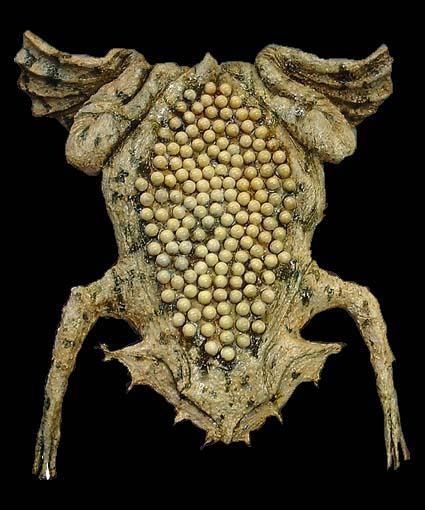
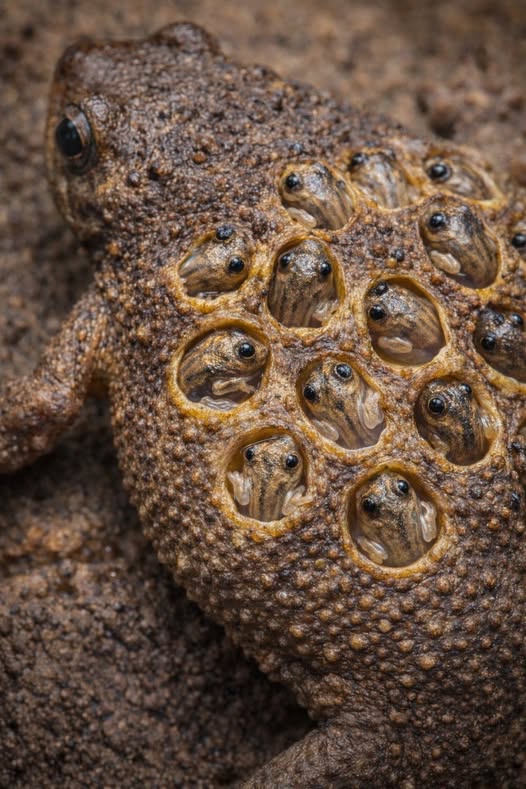
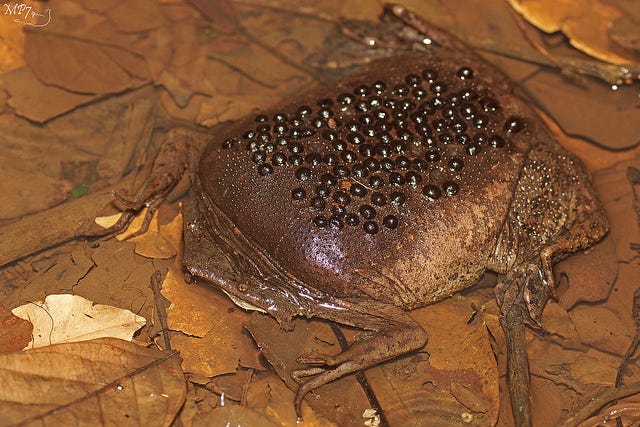
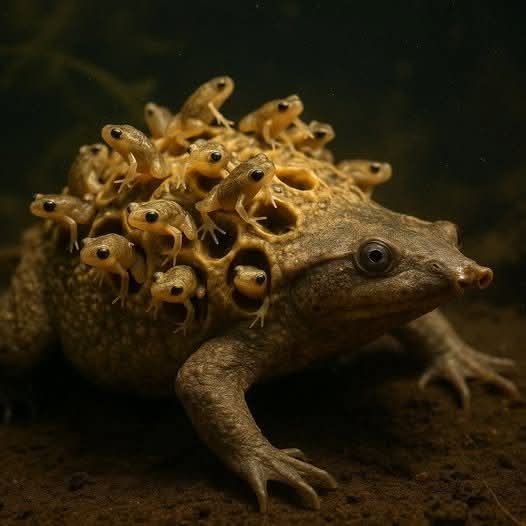
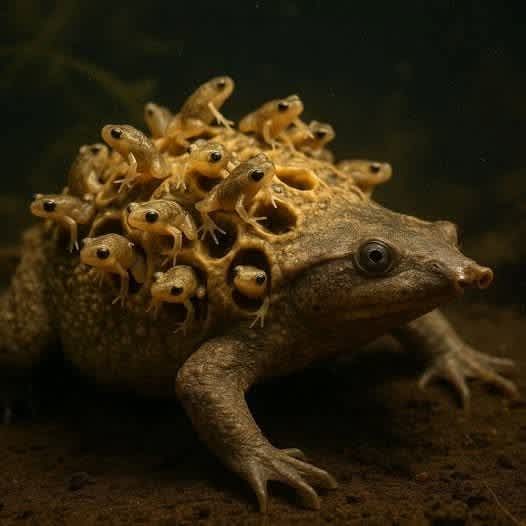
What makes the Surinam Toad world-famous is its reproductive cycle. During mating, the male assists in implanting fertilized eggs onto the female's back. Over the next few days, the female's skin swells and grows around the eggs, embedding them into her flesh and creating a "honeycomb" structure of pockets.
The Eruption:
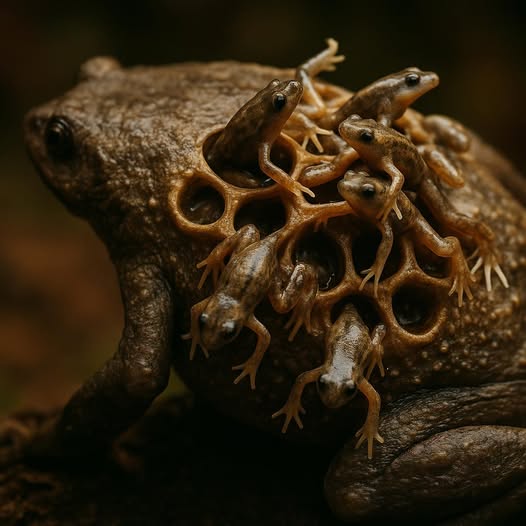
Here is the twist: The eggs do not hatch into free-swimming tadpoles. instead, they develop fully inside the mother's back pockets. When they are ready, dozens of fully formed, tiny toadlets punch their way out of the mother's skin, erupting into the water. It looks like a scene from a sci-fi horror movie, but it is actually a highly effective way to protect the babies from predators.
Habitat and Diet
- Location: Native to the rainforests of South America, including Suriname, Brazil, and Colombia.
- Lifestyle: They are almost entirely aquatic, inhabiting slow-moving streams and murky ponds. They rarely come onto land and can hold their breath underwater for up to an hour.
- Diet: Carnivorous predators, they feed on worms, insects, small fish, and crustaceans.
The Surinam Toad might not win any beauty contests, but it is a masterpiece of evolution. Its bizarre parenting method ensures that its young skip the vulnerable tadpole stage, giving them a better chance of survival in the dangerous Amazon waters.
References
- AmphibiaWeb. (2024). Pipa pipa: The Surinam Toad. University of California, Berkeley.
- National Geographic. "Surinam Toad: The Toad that Gives Birth Through Its Back."
- San Diego Zoo Wildlife Alliance. "Surinam Toad Fact Sheet."
- Rabb, G. B., & Snedigar, R. (1960). Observations on breeding and development of the Surinam Toad, Pipa pipa. Copeia.
Advertisement
Photo Gallery