The Royal Turtle

yean rath
January 11, 2026 • 372 views
Advertisement

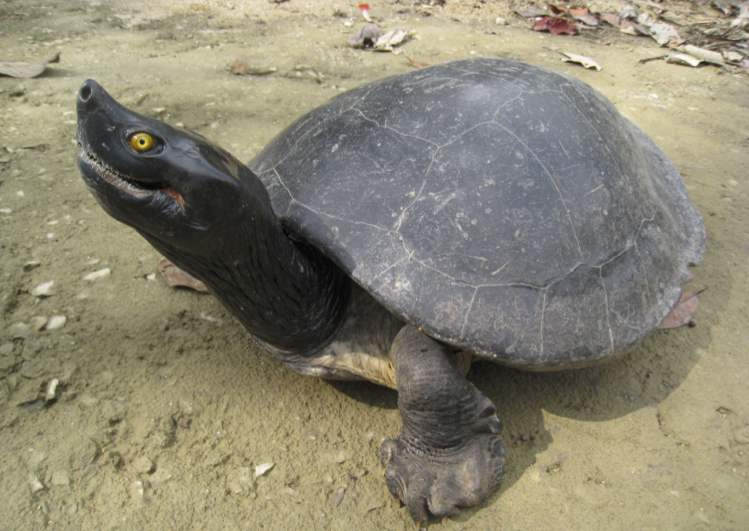
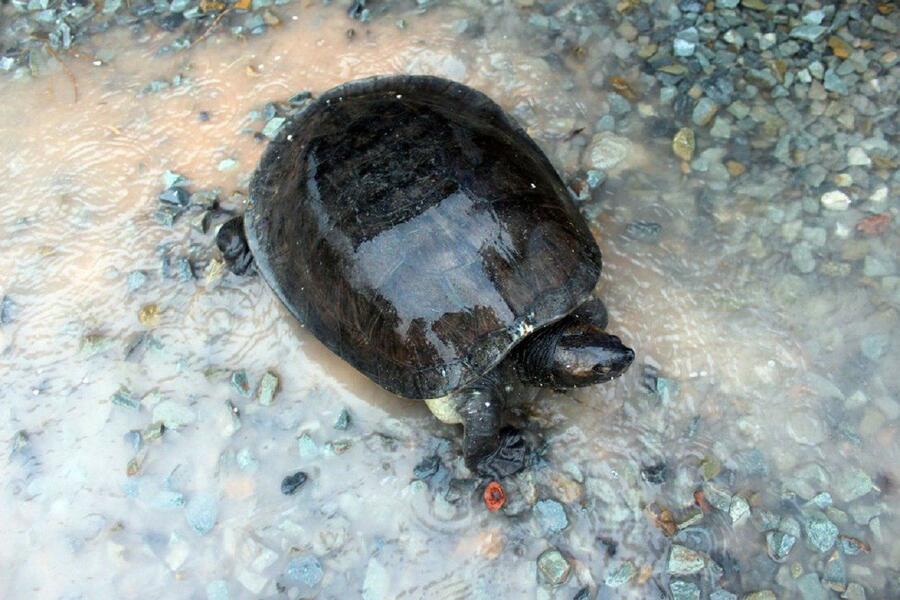
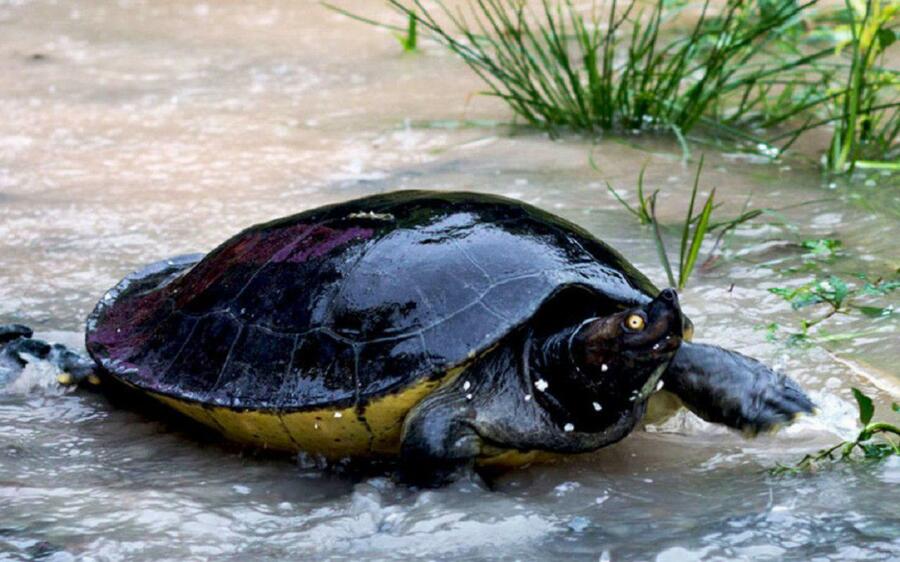
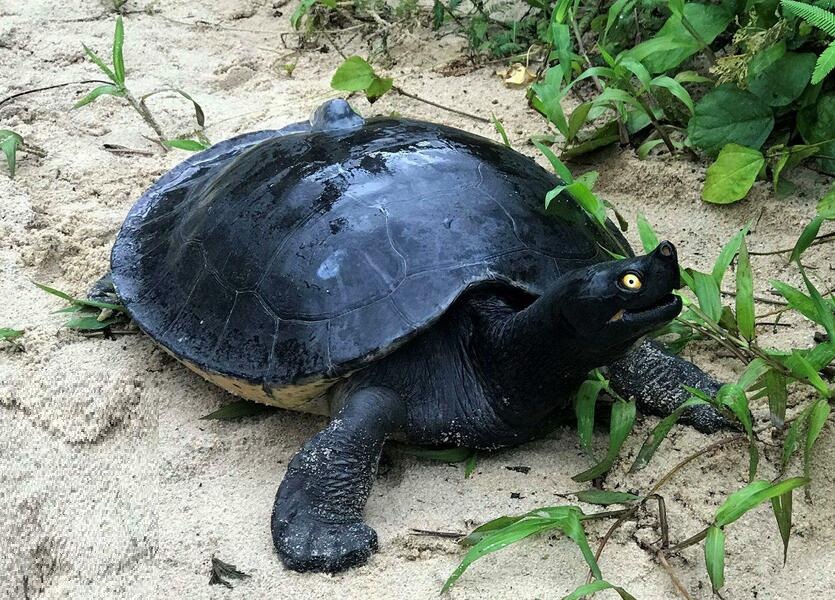
A Southern River Terrapin (Royal Turtle) swimming in a protected conservation pond in Cambodia.
A Regal Heritage and the Long Road Back from Extinction
Among Cambodia's seven national symbols, the Royal Turtle (also known as the Southern River Terrapin) holds a unique and prestigious position. Deeply intertwined with Khmer culture and royalty, it is revered not just as a species, but as a symbol of resilience and longevity. However, the story of this magnificent reptile is one of a dramatic struggle—a journey back from the very brink of extinction.
The Royal Connection
The Southern River Terrapin earned its title "Royal Turtle" because, historically, it was protected by a royal decree in Cambodia. Its eggs were considered "Royal Property," reserved exclusively for the King and the royal family. In ancient times, any commoner caught collecting its eggs or harming the turtle would face severe legal consequences.
Unique Characteristics
The Royal Turtle is easily distinguished by its unique physical traits:
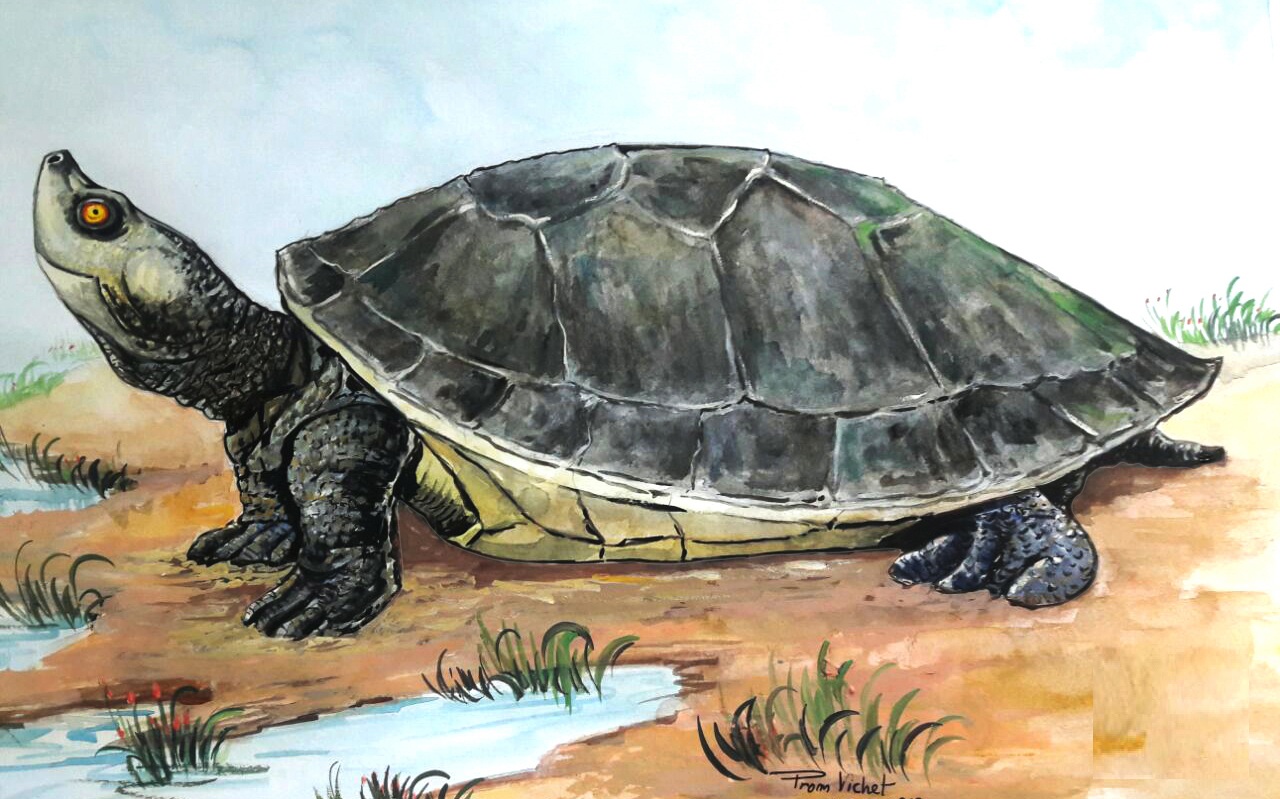
- The Appearance: It possesses an upturned, snout-like nose and distinct white eyes. Most remarkably, during the breeding season, the male’s head and neck turn a velvety black, while its eyes transform into a piercing white.
- The Size: As one of the largest freshwater turtles, it can weigh up to 30 kg, with a shell length reaching up to 60 cm.
The Miraculous Rediscovery
During the 1980s and 1990s, the Royal Turtle was widely feared to be extinct in Cambodia due to decades of civil war and over-exploitation. However, in 2000, a joint team from the Wildlife Conservation Society (WCS) and the Fisheries Administration made a miraculous discovery: a small remnant population was found in the Sre Ambel River system in Koh Kong Province. This rediscovery was a major milestone in global wildlife conservation.
A Second Chance at Life
In 2005, His Majesty King Norodom Sihamoni signed a royal decree designating the Royal Turtle as the "National Reptile of Cambodia."
Today, the Koh Kong Reptile Conservation Center plays a vital role in the "head-starting" program. Young turtles are raised in a safe environment for 5 to 10 years before being released back into the wild. The Nest Protection Program has also successfully turned former egg collectors into devoted protectors, providing them with incentives to safeguard the nests.
Remaining Threat
Despite these efforts, the Royal Turtle remains "Critically Endangered" on the IUCN Red List. Threats include:
- Illegal Sand Dredging: Destroying the sandbanks where they nest.
- Destructive Fishing Practices: Use of gillnets and illegal electric fishing often results in accidental deaths.
- Habitat Loss: Encroachment on flooded forests reduces their feeding grounds.
The Royal Turtle is more than just a reptile; it is a cultural treasure of Cambodia. Its survival is a testament to the power of collaboration between the government, conservationists, and local communities. It is our collective duty to ensure that this regal species continues to swim in our rivers, safe from the shadow of extinction.
References
- WCS Cambodia (Wildlife Conservation Society). Royal Turtle Conservation Project Reports.
- IUCN Red List of Threatened Species. Batagur affinis Assessment.
- Ministry of Agriculture, Forestry and Fisheries (MAFF). Fisheries Administration Documentation on National Symbols.
- Rainforest Trust. Saving the Royal Turtle of Cambodia.
Advertisement
Photo Gallery